If you're a fellow miniature gamer who is angered by the question posed in the title of this post, then try to take a deep breath. This is a very long and very detailed article that I have spent a lot of time on. I work to explain my conclusions in the manner I have been taught as an academic. Furthermore, you might be surprised at some of them, as I think I've been very forgiving and understanding towards the hobby that I love.
For the more progressive among you who would like to see a (perhaps deserved) feminist takedown of the miniature hobby, I'm afraid I'll probably disappoint you as well. As passionately as I feel about the representation of women in gaming, and as much is it frustrates me sometimes, the purpose of this piece is to speak to players in a way that encourages them to engage with a critical assessment about that representation. To that end I'll be building off of some really basic premises, and this will probably seem like baby steps to someone versed in feminist theory. But it is still a starting point!
Introduction: Why should we care how
miniatures depict women?
I'd like to begin by putting out a statement that should be incredibly obvious to anyone who plays miniature wargames, regardless of their gender or how they feel about modern cultural critique. Here it is:
Not a lot of women play miniature wargames.
Forgive me if this seems like a trite statement, but it is an important basis for what I'm trying to explain with this piece. Everything I have seen as a hobbyist for the last ten years has indicated that this is pretty much an absolute truth across every miniatures system. Some lucky people may have miniature-gaming groups composed of something approaching a 50/50 gender split or higher, but for the vast majority of gamers in both casual and tournament settings this is not the reality. Women just do not participate in wargaming in the same numbers that men do.
There are a lot of possible reasons for this. Wargaming is one of those hobbies that is nestled in a matrix of circumstances that can make it difficult for people outside of its typical demographic to access. Sure, a woman can technically walk into a store, get a demo game, and buy a starter box as easily as the next person. Yet on the basis of women's representation in miniature gaming there is clearly something that is stopping them from doing so, and it must be more than just the time/money/skill commitment of the hobby because those are the same challenges that all miniature gamers face.
To that end I would like to propose two primary barriers to entry in the hobby that I think women face which men do not, and I'd like to dedicate this article to examining one of them.*
- Player behavior. This is how women are treated by the players and employees that surround the miniature wargaming hobby. This is a big topic, and if I'm being honest is probably the one that is a more serious barrier to entry and more deserving of a full-length essay. But its also a lot more contentious and very difficult to really engage people about online. Additionally I don't feel comfortable speaking about a female experience that I haven't had myself. However I'd encourage gamers to think critically about their behavior as men towards women, and would point you to this superb piece by industry veteran Ken Burnside as a guide for what we, as men, can do to support women within our hobby communities. To hear how harsh the conditions faced by women in wargaming can be, I would direct you to Emily Garland's article, which spawned Burnside's piece.
- The representation of women within miniature games. That is to say, how women are depicted both the fictional setting of a game (fluff) and within the models themselves. This is what I'm going to focus on here, as it's something I can quantify, and support with visual proof. It's a lot less subjective than player behavior, but at the same time is clearly an essential component of getting women engaged in the hobby.
This issue of representation is larger than just trying to engage women gamers as well. A poor representation of women will hold back any community around any product, hobby, or activity, from being respected and appealing to people in general. It is important one takes a critical approach to the products we buy, and the commercial artists and game-designers who make them, because they are a direct reflection on you as the consumer and your community.
I'm sure some of us have experienced a social stigma around wargaming, and this is certainly one of the reasons that stigma exists. This is not to say we should make all of our decisions in consideration of the opinions of others, as plenty of that stigma is not the fault of miniature wargamers. However a poor representation of 50% of the human race is not something that we, as gamers, should be proud about, nor is it something we should seek to uphold or defend. Being a male-oriented space should not be a cornerstone of our hobby's identity. The reality is that by orienting miniature gaming around men we (however unwittingly) make it difficult for women to enter and enjoy their time in our community, and we make it easy for non-gamers to dismiss or hold negative opinions about our hobby.
We should always be critical and self-aware about the things we choose to spend our time with, even if it’s something we see as mindless or harmless entertainment. Putting some thought into how your favourite film/game/book depicts women is useful not only as a consumer but on a personal level, it is an exercise in self-awareness and empathy.
I know that miniature gaming has the potential to be enjoyed by anyone regardless of age, race, or gender. There are a lot of different ways people can get value and satisfaction out of either its hobby and/or gaming aspects. I'd like to see this hobby take the same leaps and bounds in popularity that other aspects of underground/geek culture have in the last decade. I want to believe the community is ready for this.
*Note: there are plenty of lesser barriers to entry that I won't deal with here such as game-design that only employs miniatures for combat-oriented games, the level of cleanliness/safety of the average local game store relative to other social venues, etc. As much as these might be factors, they are also things that have a lot of individual variance and can be overcome and improved fairly easily.
Setup
To generate some food for thought about the representation of women within miniature gaming, I have gone through and rated how
sexist or respectful the depictions of women are within sculpts for some of the
most popular miniatures systems. I have rated each out of ten, with a higher number representing a generally more respectful depiction, while a lower
number represents a generally more sexist one.
In order to assist me with reviewing each miniature range I'll be
enlisting the help of my longtime partner. She is a fellow academic pursuing
studies of feminism, gender, and sexuality at a doctoral level and is thus
ideally situated to bolster the legitimacy of the assessments we make here. She
is not a miniature gamer, but I feel this strengthens rather than undermines
our mutual assessment, as it helps indicate an outsider perspective. It serves to answer the question of how people, and women in particular, might feel seeing some of these miniatures.
Obviously these ratings are a matter of opinion, but given our differing
backgrounds and level of involvement in the hobby I feel it is a very informed
one. Our different contexts, the range of ratings we have distributed, and the level of explanation provided all suggest that these not assessments that are easily dismissed as unfounded. My intention here is to try and help elevate miniature gaming with some critical thinking, not denigrate it.
Exemptions: I am exempting historical miniatures wargames because they
largely do not include women, and have something like an excuse for doing so. Furthermore
their community remains somewhat separate from non-historical miniature
wargaming. I'm talking specifically about games in which the creators entirely
define the world they create, and thus can and should be examined on their
portrayal of women. I'm also not dealing with miniature interpretations of
already-established franchises such as the Batman Miniatures Game, where the sculptors and design team of the miniatures system don't have a lot of leeway in terms of how women are presented.
Methodology
- I went through each range
and saved an official image for every figure that portrays a female
character to make something like a "gallery" for each. I also
made a note any time the range depicted characters of color, at least
according to fluff/official paint scheme.
- My partner and I sat down
and, over the course of several hours, went through the contents of each
gallery discussing the figures and taking notes in order to create an
overall rating for how respectful or sexist its depictions of women are,
as well as select what we felt to be the "best" and
"worst" figures of each range in terms of those metrics.
Before we started this assessment I emphasized the following in order to give a bit of context:
- Every figure we explore is
supposed to be in a combat, or combat-like, environment.
- All of these games lean
towards pulpy genre fiction and pure escapism, and consequently need to be
approached as an entertainment medium. As much as it does not excuse them
from sexist portrayals of women, these figures are also not attempting to
be serious representations of real-life women.
- There are limitations on the
level of detail/variety possible for sculptors at the 28mm range. When
trying to indicate a character is a female it can be difficult to make it
clear without exaggerated proportions. This is especially
true if there is a lot of armor involved. Again, this
does not excuse when these exaggerations are problematic ("boob armor" is endemic), but they
can be done well and also done poorly.
Our conclusions are presented here as a synthesis of
views between a dedicated miniature hobbyist and a feminist academic, with no
distinction between who said what. We discussed everything until we agreed on
the overall score of each range.
When attempting to determine whether a miniature was a respectful or
reasonable representation of women we looked at the following:
1. What is her clothing
and/or armor like? Does it make sense for what she is supposed to be doing?
2. How is she posed? Does it
look like she is in, or ready, for combat?
3. What is the fluff for the
model? Is there a reason provided for why she might be dressed a certain
way? This did not come up every time, but I did raise it when I felt the
fluff might be a significant factor in deciding how we felt about a miniature.
These lines of inquiry are based off of similar criticisms of female representation being discussed within other forms of entertainment and game-environment. The most obvious of these is the videogames industry, and we would refer you to Feminist Frequency's discussions of female videogame body language and female armor if you want some further explanation for why these depictions are significant.
Infinity
This is one of the most important ranges we evaluated, as it's
not only a company that has been critically lauded for the quality of its
sculpts but is also the only game system listed here whose figures presume to
relate to something like modern individuals and modern cultures. Given this
context we elected to spend more time on this by splitting the female models
into their respective faction and assign a score and best/worst mini for each
one.
Aleph 5/10
Despite the cool Ghost in the Shell fluff, there is a rampant amount of
highly sexualized “shoot from the hip” silly poses, and focus on female
body parts. The reason Major Katsuagi is a more compelling character in the
GITS film (over her heavily sexualized TV incarnation) is her muted expressions and
struggle with self-identity acting as a foil to her sexualized body. That
doesn’t come across here at all; instead we have cyborg women that apparently really want you to
know how sexy they are. This is underscored by the
contrast between the sexualized female post-humans with the bulky “hoo-rah!”
machismo of the male Myrmidons.
Best: Myrmidon Officer
 |
| The female myrmidon looks badass and combat ready so she is, unsurprisingly, Aleph's best female sculpt. Unfortunately she is also the only woman in the otherwise exclusively-male Myrmidon range that encompass the "door-kicking and ass-whooping" aspect of the faction, whereas most of the women are part of the "infiltrating society as sexy cyborg babes" portion. |
Worst: Asure w/spitfire
 |
| Pretty much any of the Asura/Posthuman figures could go here. They're all powerful cyborgs that chose to fight on the battlefield as naked women for.... no good reason. In contrast most of the male cyborgs like Achilles and Ajax get slabs of plate armor. Note the gun is impractically positioned on her hips so we get a better view of her breasts. |
Ariadna 4/10
The fluff would have you believe Ariadna women would be badass ladies in
present-day combat attire who are still tough enough to take out their high-tech opponents,
but the models are deeply underwhelming in this regard.
Best: Uxia McNeil
 |
| Uxia looks practically dressed and combat ready for some stealthy infiltration. Also a special mention to the females in the Wulvers unit, who represent probably the only women sculpts with prominent muscles in the Infinity range. |
Worst: Caledonian Volunteers
 |
| That we are to presume these two figures represent the same type of combatant on the tabletop is absurd. Everything about the female figure connotes a prioritization of displaying sexuality over her supposed role as a combatant. There is the "shoot from the hip" arched-back pinup pose and the extreme amount of skin on display, but of particular note is the clothing: the kilt of the male figure, something that connotes the Scottish heritage of the figures' fluff, gets morphed into a tiny schoolgirl skirt that is so short it reveals a flash of panties, completely undermining not just the assumption she is in combat, but also the figure's background fluff , in favor of flaunting its sexuality. Corvus Belli should be legitimately ashamed of ever having put out this figure set. |
Haqqislam 8/10
Great fluff about a second golden age of Islam that adds some real
diversity to the Infinity world. For the most part women are well armored with
the same uniform as their male counterparts. The figures are somewhat
whitewashed in their official paintjobs, and we haven’t seen anything resembling
a Hijab or Niqab, but overall it’s certainly a high watermark for the infinity
range and the depiction of women in tabletop gaming in general.
Best: Naffatun
 |
| Great stuff here, a 50/50 split between male and female squad members and a practical gender-neutral uniform that is the same for each. Not sure about the lack of helmet on the one female figure but overall this is great. |
Worst: Nazarova sisters
 |
| Rule of thumb: If you are wearing less clothes on a battlefield than the "combat geishas" (Odalisques) you should probably wear more clothes. Thankfully this level of sexist absurdity isn't present anywhere else in the Haqqislam range, but boy howdy what an outlier. |
Nomads 5/10
It was somewhat surprising that the nomads ended up getting rated so highly, but we liked the non-standard beauty norms being portrayed, even if they
were gratuitous sometimes. The fluff of them being cyberpunk-style renegades
also helps contextualize things a bit.
Best: Reverend Custodier
 |
| Very cool figure here. Great dynamic pose and well-armoured while using body proportions that aren't bums or boobs to convey femininity. |
Worst: Reverend Moira
 |
| One might be able to look past the "pointy bra" aesthetic with her chest armor, but I think we can all agree that wearing just a thong in a combat situation is absurd. Also note the passivity of the female figure here, as the sculpt design makes it look as if a gust of wind is blowing aside her trench coat rather than having her bum being something she's clearly displaying herself. The suggestion that her outfit would otherwise cover her a lot more if it weren't for this "gust of wind" makes the audience for this figure seem really voyeuristic, and adds an additional problematic layer to the figure. |
Panoceania 9/10
Some really solid female minis here, with a lot of the armor being
really practical and only a few poses providing any real issue. A great range
for depicting women.
Best: Jeanne D’Arc in Mobility Armor
 |
| What a fantastic model! The proportions are designed so that it would still look like a woman even without the flowing hair, but there are no buttcheeks or breasts in sight. Instead you get a terrifyingly angry combatant hurling herself at the enemy! |
Worst: Fusiliers
 |
| Note the difference in posing between the male/female fusiliers who are at rest. One is a battle-weary veteran and the other looks like she's checking out how big her breasts are in a mirror. |
Yu Jing 7/10
Again, it’s nice to see some racial diversity that doesn’t feel
really stereotyped or problematic. Some really solid female figures in this
range brought down by one or two egregious instances.
 |
| A gender-neutral uniform that's still very dynamic. The female model is still clearly female via her arm proportions. No bubble-butt or heaving bosoms needed. |
Worst: Asuka Kisaragi
 |
| Once again, the double standard on display here is absurd. We have a male figure in which there is litterally no skin on display whatsoever, with a pose that connotes he is actively engaged in combat. The female figure on the other hand, ostensibly the same type of unit, has extremely prominent cleavage, no helmet in order to show off her face and long hair, and is posed in such a way that she is clearly not actively engaged in battle. Note that rather than being hunched over her motorcyle like her cohort, which might obstruct our view of her cleavage, she is instead standing upright and thrusting out her chest at the viewer. |
Infinity
Conclusions & Thoughts
Infinity is difficult to pin down as it’s a miniatures
range that contains a lot of extremes. Corvus Belli unquestionably produces
some of the best depictions of women out there, but also some of the worst (at
least among the most prominent games and companies that we're looking at here). While there is a strong female
presence it is problematized by frequent usage of pin-up aesthetics. It appears
CB wants to ensure there are token babes for every faction, and judging by the
sexist absurdity that is their “Bootleg” range this seems to be something the
company considers a core aspect of its identity.
That they clearly know how to produce positive female
depictions makes the decision to have “sexy babes” a keystone of the infinity
aesthetic all the more disappointing. The level of sexualisation on display in Infinity, like those of the other systems we examine here, does not appear to serve any purpose beyond a desire to appeal to a presumed straight-male consumer.That the game itself doesn’t
have anything even remotely resembling sex or intimacy means deciding to make
it “sexy” is less about a passion for the game and hobby and more a decision
from a marketing/design team to maximize profits. It's one thing to portray strong and healthy individuals as military combatants, but CB deliberately oversteps the line of what might feasibly be considered "practical" to sex things up. This is not an attitude anyone
should be particularly happy to see within the community, and CorvusBelli has already come under fire for its sexist portrayals of women.
Corvus Belli is highly indicative of the miniature gaming industry in that it makes the assumption that its system will be played primarily by men. As much as this might be true, they make the further assumption that the best way to appeal to the desires of this male demographic is through the over-sexualization of many women figures. In doing so, they only serve to reinforce a feedback loop that miniature gaming is something for men, and men alone. We consider this pandering not only actively discouraging to potential female gamers but also insulting to the male consumer, as it implies that most straight men would only enjoy their miniatures or systems if they are constantly presented with heavily sexualized female figures. We do not believe that Infinity would be less successful if it were to have less sexualization, nor do we believe that male consumers cannot appreciate games containing female characters unless those female characters are sexually displayed.
A frequent excuse I’ve heard about CB’s style when
it’s criticized is that it’s drawing from anime and therefore has a very
specific aesthetic it’s aiming for. This is actually great, and has helped make
the system really unique and produced some superb artwork/sculpts. However it
doesn’t act as an excuse for the extent of the sexualisation within the system.
As someone who is a big anime fan, you’ll notice that most of its critically
lauded works tend to be the ones that downplay, satirize, or outright ignore
the fan service tropes. Ex: Studio Ghibli, Samurai Champloo, GITS, Full Metal
Alchemist, Psycho-Pass, etc. If Infinity’s frequent sexualisation is a result
of its anime influence then its creators consciously elected to borrow from one
of the worst aspects of the anime medium, an attitude to portraying women that
continues to hold anime back from being a more respected and widely-regarded medium. This seems
like a lazy excuse to not challenge yourself by pointing to the foibles of another industry.
To return to the miniatures themselves, one of the
ways this anime-influence comes up in Infinity is the homogenous nature of its
bodies, with little variation in the respective proportions of male and female
figures. There is a slightly more variance in the male range, with some models
being quite skinny while others are more muscular, but for the most part every
guy is toned and relatively beefy. Whereas for the women this manifests as very
thin waist/arms/legs with large breasts and often long hair. There is zero attempt within the Infinity range to portray anything outside of this female
body configuration, and it seems like each female character could easily fit
into the armor (or lack thereof) of any other female character. Even setting
aside issues of sexualisation, this lack of diversity makes the
female characters feel interchangeable.
Some players make a fluff-based excuse that the Infinity universe has such advanced biometric technology that people can look like whatever they want, and therefore decide to be sexy. The obvious response here is: "A sexy lady would still wants armor/clothing in a fight and wouldn't be in a silly pose for no reason". We would also counter this by suggesting that a world in which every woman in the Infinity-universe wants a Barbie body is a dumb idea. Anyone who attempts to justify every female miniature having huge breasts, long hair, and skimpy clothes by pointing to the fluff is undermining the setting in order to justify what is clearly just a callus design decision. These ubiquitous barbie-doll bodies are especially problematic given that even mainstream media is starting to diversify what it labels "sexy" across different ages and body types. You'd think that Corvus Belli, both as fluff-writers and as a company, could include at least some muscular women as part of Infinity's elite spec-op
teams.
This has perhaps focused too much on Corvus Belli’s flaws in
their portrayals of women, and we want to emphasize that they get it right as
often if not more than they get it wrong. Everything I have criticized CB for above applies to the miniature-gaming industry as a whole, many of whom present far more problematic figures. Furthermore
there is nothing inherently unsavory about a woman character expressing her
sexuality. Rather what matters is
the context, and this is especially true of miniature wargaming in which we
have objects depicting women characters that are designed and sold within a
male-oriented industry. Within the miniature gaming environment we see nothing except a character's appearance, and therefore the sexualization of women figures cannot serve any purpose beyond titillating a presumed straight-male audience. We did ultimately reached the conclusion that
sexualisation of female Infinity figures is overwrought, with a lot of
it being there for very little reason. Thankfully it’s balanced by some really
solid depictions of female combatants, but there is still a lot of room for
improvement.
Special note: Some serious bonus points to Infinity
for a relatively strong inclusion of racial individuals. To my knowledge
there are no other non-historical games that include such an extensive
portrayal of characters of color, and certainly nothing with the
level of respect CB shows.
Warhammer 40k 7/10
This result may seem surprising given the almost-total absence of women within the
40k setting. However those few women who GW does depict on the tabletop are actually pretty good in comparison to many other systems. So 40k ended up scoring highly on its figures. A few interesting and salient points came up while we were discussing these:
Firstly, the facial expression on female
figures has a very real effect on how one interprets the rest of their body. A
figure that is shouting, angry, and generally looks like she’s taking part in a
battle has a somewhat mitigating effect on whatever sexuality they're depicting.
A prime example of this is the dark elf succubus, who looks genuinely scary
despite her somewhat revealing clothing.

Such an appearance helps to imply the figure is in a the battlefield environment and not (exclusively) on display for a presumably male viewer. Note that for this to work it does need to be accompanied by a suitably combat-ready pose. As much as facial expressions might only be an implication, and does not excuse problematic clothing, it is something we noticed.
Secondly, we reached the conclusion that when
it comes to depictions of women, quality outweighs quantity. Namely,
it’s a lot better for a range to present relatively few female figures, but
have them be positive and respectful representations, rather than have a large
presence of heavily sexualized women. With that said, given the totally fictional nature of these settings/figures there is no reason we, as the consumer, cannot expect both quality and quantity representation of women from miniature gaming companies. We're just saying that if we're forced to choose, we would prefer the former. This is one of the primary reasons that Geedubs scored highly here, the women figures in the 40k range are generally not too bad relative to other systems even though there are far less of them.
Special Note: Despite the figures scoring well, the near-total absence of women within the fluff
of Games Workshop, and the poor portrayal of them when they do come up, is so notorious that it has become a target of popular satire. As much as quality might outweigh quantity, this does not excuse the conscious neglect of women by a games company. A potential female gamer has almost no options for fielding female units using Games Workshop sculpts, and no options whatsoever in which the fluff behind those tabletop figures is anywhere near as empowering as the endless glorification of the space marine male. It would be a great boon to the
hobby and Games Workshop’s image as the premier miniature-gaming company if they
were not only to introduce more means to field female
characters on the tabletop, but make those women as powerful and dangerous as their male cohorts within the setting.
Best: Commander Shadowsun
 |
| An all-time favourite female sculpt. Why? Because it underscores her gender is totally irrelevant on the battlefield. She's got a great backstory and you know it's a woman, but when you look at the model all you see is a badass engine of stealthy destruction. |
Worst: Sisters Repentia
 |
| Hoooboy, aren't these a sight. Nothing suggests an empowered and battle-ready woman more than bondage gear and handkerchiefs for clothing. Thankfully GW hasn't portrayed anything this egregious in over a decade, and these are from the outdated Sisters of Battle range. Unfortunately some of these old sculpts are still available on their website, even if they are now very much exceptions to the norm. Looking at these really underscores how far we've come as a community, and how far we still have to go... |
Warhammer
Fantasy/Age of Sigmar – 6/10
Again, a score that’s somewhat higher than might be expected, for similar reasons to what has been outlined in the 40k rating. There is a
prevalence of angry faces that helps to mitigate the more sexualized models such
as the wych elves. A few other points that came up here:
The “angelic” aura around some of the Brettonian and Elf
women can be just as problematic as having a bunch of needless skin on display.
While the fluff obviously accounts for why the lady of the lake would show up
to battle in a dress, the lack of other female figures across the range makes this
“battlefield dress" stand out like a sore thumb.
 |
| If your sculpt sits side-saddle in a silk dress on a unicorn then there is a slight possibility it's a woman. |
There is something like a
Madonna/Whore complex across the Fantasy range, in which women are either
enchantresses wearing dresses or scantily clad demon witches
screaming for blood, with very little in-between.
An interesting point that came up was the
sexualisation of non-human women, which we felt is generally less problematic
than women who are presented as strictly human. The implication that what
you’re looking at is an entirely fantastical representation does provide an
extra layer of suspended belief that occasionally might make a sexualized
figure more acceptable. This is hardly an absolute rule, as all of these
figures (especially elves) are clearly invoking the human form, but there is a
real distinction to be made in the mind of the consumer between the sexualized
portrayals of “Morathi, Queen of Naggaroth” versus "Megan, from San Francisco”.
There is a total lack of non-white characters within
the WHFB range, with very little by way of female representations. Currently we haven't seen female figures of any kind released for Age of Sigmar, which is definitely disappointing.
Best: Valkia the Bloody
 |
| There are some weird armour design choices here between the prominent breasts and "skirt". But that doesn't change the fact Valkia looks like a legitimately terrifying combatant. |
Worst: Dark Elf Sorceress
 |
| The facial expression is pretty good here, as is the toned stomach and musculature. But however "non-human" you are, that is just not enough clothes to wear to a fight. |
Malifaux 4/10
Malifaux fared the worst out of all of the
systems we analyzed and for good reason. Despite the lovely quality of their
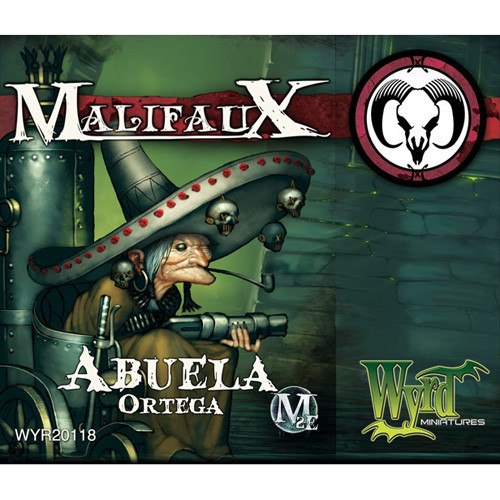
plastic sculpts it seems like every woman, with a few comical exceptions (ex: Abuela)
is deeply sexualized and woefully under-clothed. While we appreciate this is a game
about magic and therefore power-armor is not going to show up, that doesn’t
explain why nearly every woman is posing in really fetishistic-looking clothes.
Malifaux’s aesthetic and fluff suffer somewhat from wanting to draw on everything at once. It has western cowboys,
steampunk robots, undead zombies, eastern samurai, nightmare demons, Victorian criminals,
southern voodoo, etc. The result is a range that includes a lot of diversity
but does so in a way that seems really tokenistic and appropriative. Nothing
feels cohesive or well thought-out, and it’s a matter of slapping either a lacy
Victorian dress or a kimono on a character that determines their
backstory/personality/motivations. Consequently we felt the fluff of Malifaux
fails to present any narrative justifications for this overt sexualisation and use
of cultural signifiers outside of surface appearance and “cool” factor.

This cultural appropriation extends not only
to the bodies of individual characters but also the materials of those cultures. Instead of full-length kimonos we get
skimpy little skirts with Asian designs; instead of the unique imagery of the
New Orleans Mardi Gras we get some feather boas and a slinky dress. The notion
of Edward Said’s “Orientalism” came
up when we were discussing this point. It’s as if the materials of these
different cultures exist for the miniature designers to manipulate into a
hollow echo of the original in order to make some “exotic” babes.
There is an undercurrent of sexualized
body-horror that seems to apply only to female undead/demon models. Body horror
can be really effective and unsettling (Alien is one of our favourite films)
but the double standard going on here between male and female undead/demonic
figures really undercuts its legitimacy.
The “doppleganger” figure is actually
a decent example of body horror, but in the context of a game that also presents
you with the “rotten belles” and “nephalim” models, it feels less like it’s
trying to be unsettling and more like an excuse to paint more breasts. While there are a few rotting undead men kicking around, none of them are naked or sexualized in a similar manner.
To whit: women in Malifaux are always on display. Whether they’re rotting corpses or not. Whatever “personality” they might have
frequently stems from a problematic or token usage of different materials/clothing.

Special Note: “Toni Ironsides” (seen above) might be
seen as an exception to this conclusion but we actually see her as one of the
most severe examples of a tokenism. She is a black, street-fighting,
anti-establishment ex-slave, who has cornrows and wears bandages on her face. As much as some of these facets might be legitimate expressions of Black American womanhood, beauty standards, or culture, the decision to consolidate all of these facets into a single character, with no comparable black characters within the range, reinforces the idea that this is a token representation of a black woman rather than a legitimate attempt to engage with the nuances of presenting a character of color within a given fictional setting. In this regard Toni Ironsides is no different from any of the other token cultural representations mentioned above.
Best: Rasputina
 |
| Rasputina is suitably chilly and intimidating looking, and one of the few decent female sculpts in the range. |
Worst: Angelica
 |
| Angelica is a scantily clad black woman taking to the battlefield in a slinky dress with some shoutouts to the New Orleans Mardi Gras. She runs a stage show and is supposed be very intimidating but that's difficult to believe when she's posing in a way that ensures her dress barely covers her. |
Bonus Worst: Lady Justice & Lilith
 |
| Just to reaffirm why Malifaux is our lowest rating, I present two of Malifaux's most powerful combat characters in the game, Each is the leader of her own faction. To be fair, this version of Lilith is based on her original appearance in 1st edition, and the current one has more clothes. Either way, this level of sexualization is pretty absurd. |
Continued in part two,
found here.